 Central Office Flag Dedication
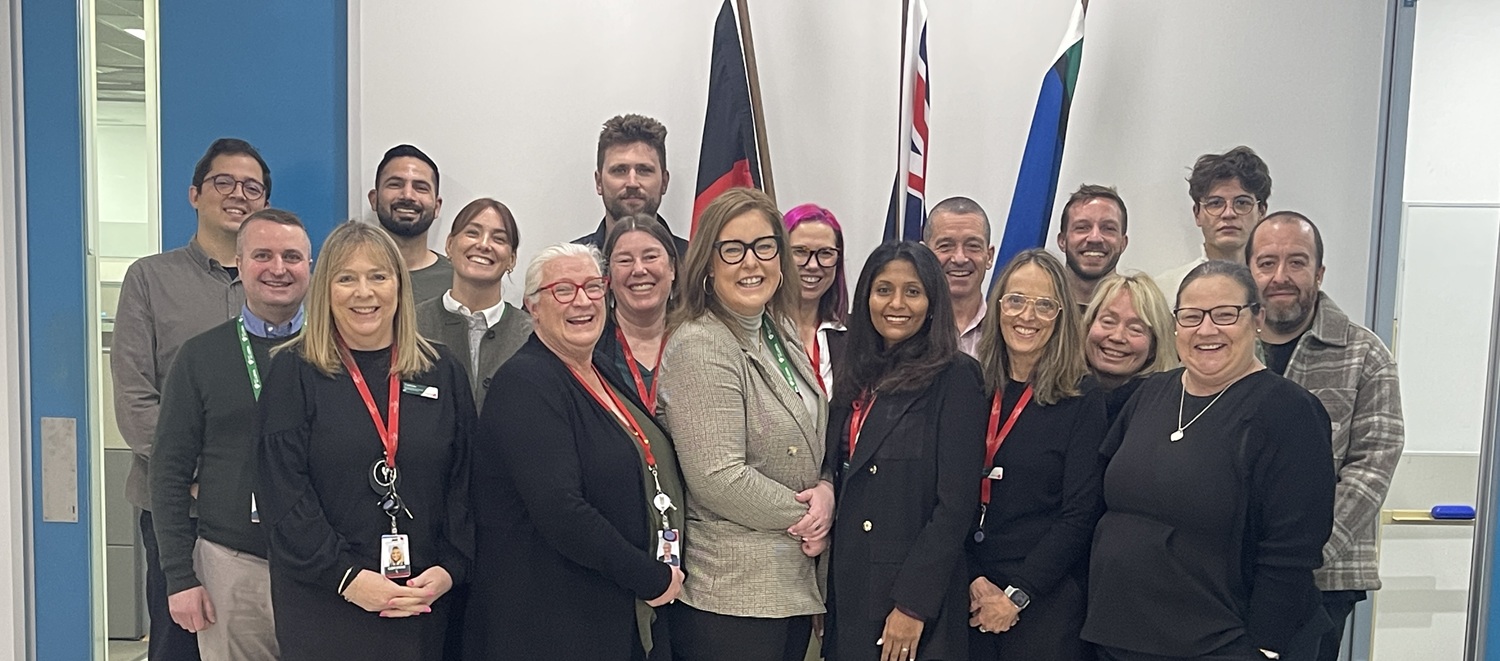
During NAIDOC Week, 5-12 July, staff at central office attended a ceremony to install the Australian, Aboriginal and Torres Strait Islander flags in a permanent display in the reception area.
Tamara Paton, Acting CEO noted that the national NAIDOC committee marks 50 years this year, ‘five decades celebrating the voices of indigenous communities, with the theme 50 years of deadly’.
Jannette Fleming, Executive General Manager Community Services, gave the Acknowledgement of Country and of all who have served.
Head of Strategic Partnerships, Chris Gray, noted that around 1200 indigenous Australians served in World War I and around 7000 in World War II, at a time when First Nations people didn’t even have the right to vote.
Today there are over 3000 ADF members and close to 12,000 veterans who identify as Aboriginal or Torres Strait Islander. Chris said:
“This week, as we celebrate NAIDOC Week and think about the struggles of the people who have lived here for six hundred centuries, those of us who are not indigenous have a duty to support First Nations Peoples. We must listen to indigenous leaders and we must become better educated and better supporters and allies to those who have welcomed us to their country. We have a shared future in this beautiful country.”
Staff members Chris, Kelly and Ramiro raised the new flags for the first time.
Frankston South
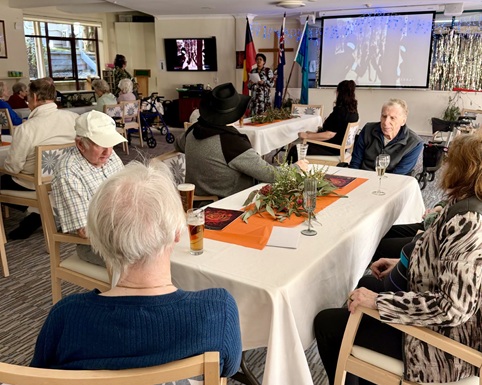
Residents and staff came together to recognise and celebrate the rich histories, cultures and contributions of Aboriginal and Torres Strait Islander peoples. Residents enjoyed an afternoon of connection and conversation over refreshments as we reflected on the importance of respect, understanding and celebrating culture. (Below left)
Brighton East
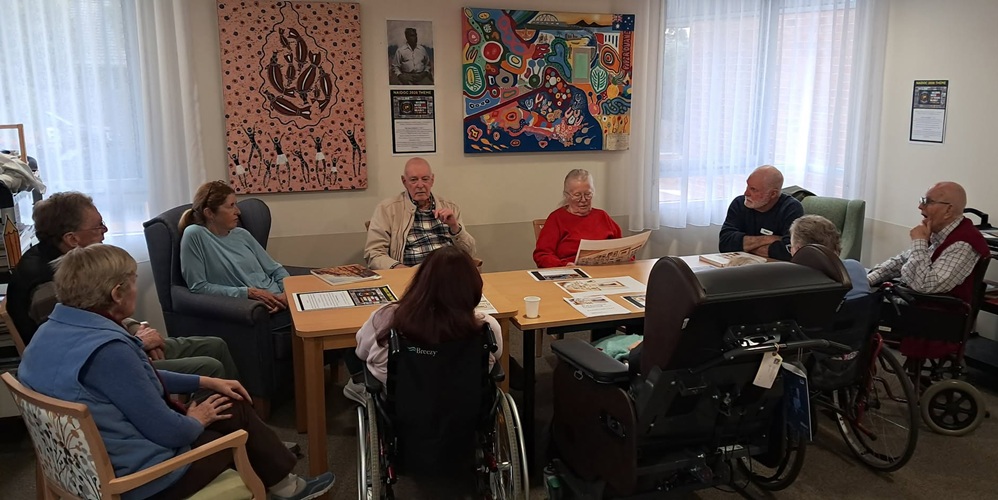
For their NAIDOC Week Art Expression class, residents heard a fascinating talk by Dr Beverley Castleman about the Hermannsburg School of Art – an artistic movement of watercolour painting in Ntaria Hermannsburg, in Western Aranda Country in Central Australia. Beginning in the 1930s with the work of now globally celebrated master painter Albert Namatjira, the tradition has continued to flourish over the decades since. (Below right)